
There are dates on the calendar that seem to attract catastrophe the way certain coastlines attract storms. You flip to April 15 in the history books and find shipwrecks, assassinations, and bombings stacked on top of each other like geological layers of misfortune.
You land on November 22, and the air changes. These aren't just busy dates. They feel loaded. Most people encounter these patterns and reach for one of two explanations: pure coincidence or something genuinely sinister woven into the fabric of time.
Both answers are unsatisfying. The real story is more interesting than either, sitting precisely at the crossroads of documented history and the peculiar architecture of the human mind.
Key Takeaways
- The most historically event-dense dates include April 15, November 22, September 11, March 15, and August 4
- A "cursed date" can mean three genuinely different things: a mythologized date, a statistically unusual cluster, or a culturally designated ominous day
- The cognitive phenomena of apophenia, confirmation bias, and survivorship bias are largely responsible for how these dates feel supernatural
- Cursed date traditions exist in virtually every major civilization, from ancient Rome to modern Japan
- Some dates genuinely carry unusual historical weight; most are amplified far beyond their evidence by selective memory
What Actually Makes A Date "Cursed"?
Before listing dates, it's worth building the tool you need to actually evaluate them. Not every "cursed date" earns that label the same way, and conflating them produces the kind of shallow listicle that leaves readers more credulous than informed. Here is a taxonomy that holds up under scrutiny.
The Three-Tier Taxonomy Of Cursed Dates
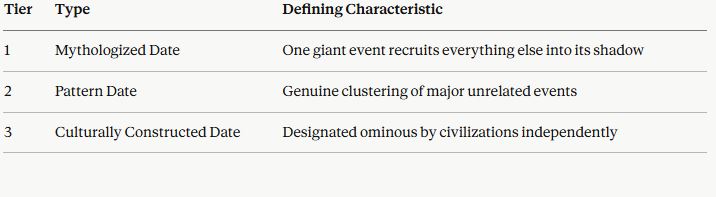
Tier 1: The Mythologized Date
One colossal event anchors the date in collective memory. Every subsequent event, however minor, gets pulled into its gravitational field. The date doesn't have more tragedies than others; it has one tragedy so enormous that people go looking for more, and confirmation bias does the rest.
Tier 2: The Pattern Date
This is rarer and more genuinely interesting. Multiple large, unrelated events have independently clustered around the same calendar square across different years and contexts. The clustering may still be coincidental, but it's at least statistically worth noting rather than immediately dismissing.
Tier 3: The Culturally Constructed Date
Different civilizations have, independently and through entirely separate reasoning, designated specific dates as ominous. These are dates that feel cursed, not because of post-hoc pattern recognition, but because entire societies built ritual and avoidance around them before modern record-keeping even existed.
Three-Tier Taxonomy At A Glance
The Difference Between A Cursed Date And A Busy Calendar
History is dense. Somewhere between 150 and 200 significant events, wars, deaths, natural disasters, and political upheavals occur on every single calendar date if you look across all of recorded human history.
The question is never whether bad things happened on a date. The question is whether they happened at a rate or with a thematic coherence that exceeds what random distribution would predict.
Keeping this distinction in mind transforms the rest of this piece from a list of spooky coincidences into something genuinely analytical. Some dates earn their reputation. Others have simply been assigned one by a culture hungry for patterns.
The Dates That Have Earned Their Reputation: Tier 1 Mythologized Dates
These are the dates when one event so thoroughly dominates historical memory that the date itself became a symbol. What makes them fascinating is what gets added to them afterward.
April 15: The Calendar's Most Documented Dark Square
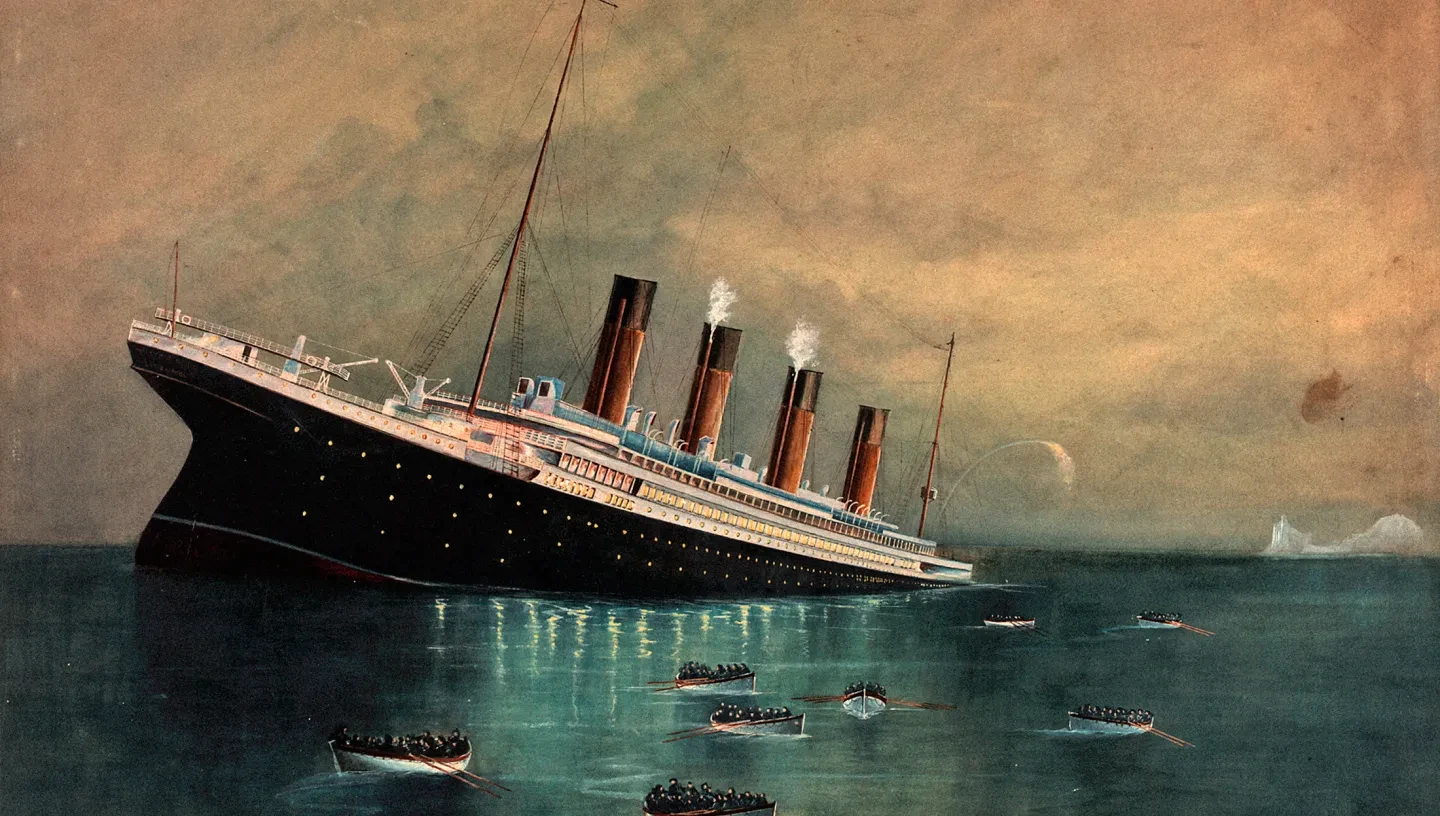
April 15 has an unusual density of genuinely significant tragedies that holds up even under critical examination. The RMS Titanic sank in the early hours of April 15, 1912, killing more than 1,500 people.
Abraham Lincoln died on April 15, 1865, from the gunshot wound he received the night before at Ford's Theatre. The Boston Marathon bombing occurred on April 15, 2013. The Notre-Dame de Paris cathedral fire broke out on April 15, 2019.
That four events of this scale share a single date is legitimately unusual. It doesn't require supernatural explanation, but it doesn't need to be dismissed either. April 15 is, by any reasonable measure, a Tier 2 Pattern Date that has also been mythologized into Tier 1 territory.
It is worth noting, for the sake of intellectual honesty, that April 15 is also Tax Day in the United States, a high-stress cultural marker that almost certainly amplifies the date's perceived ominousness for millions of Americans.
November 22: A Date That Stopped Three Worlds At Once
On November 22, 1963, President John F. Kennedywas assassinated in Dallas, Texas. The event was so seismic that the date became a permanent psychological landmark for an entire generation. What most people don't know is what else happened that same day.
C.S. Lewis, the author of The Chronicles of Narniaand one of the 20th century's most widely read Christian thinkers, died in Oxford on November 22, 1963. Aldous Huxley, author of Brave New World, died in Los Angeles on the same date.
Three men of enormous cultural weight, a president, a moral philosopher, and a visionary novelist, left the world within hours of each other, almost entirely unnoticed in the noise of Dallas.
This kind of coincidence, three significant deaths on one day that history would otherwise have spread across many obituaries, is precisely the kind of clustering that makes November 22 feel like a Tier 2 Pattern Date wearing Tier 1 clothes.
September 11: When A Date Becomes A Wound
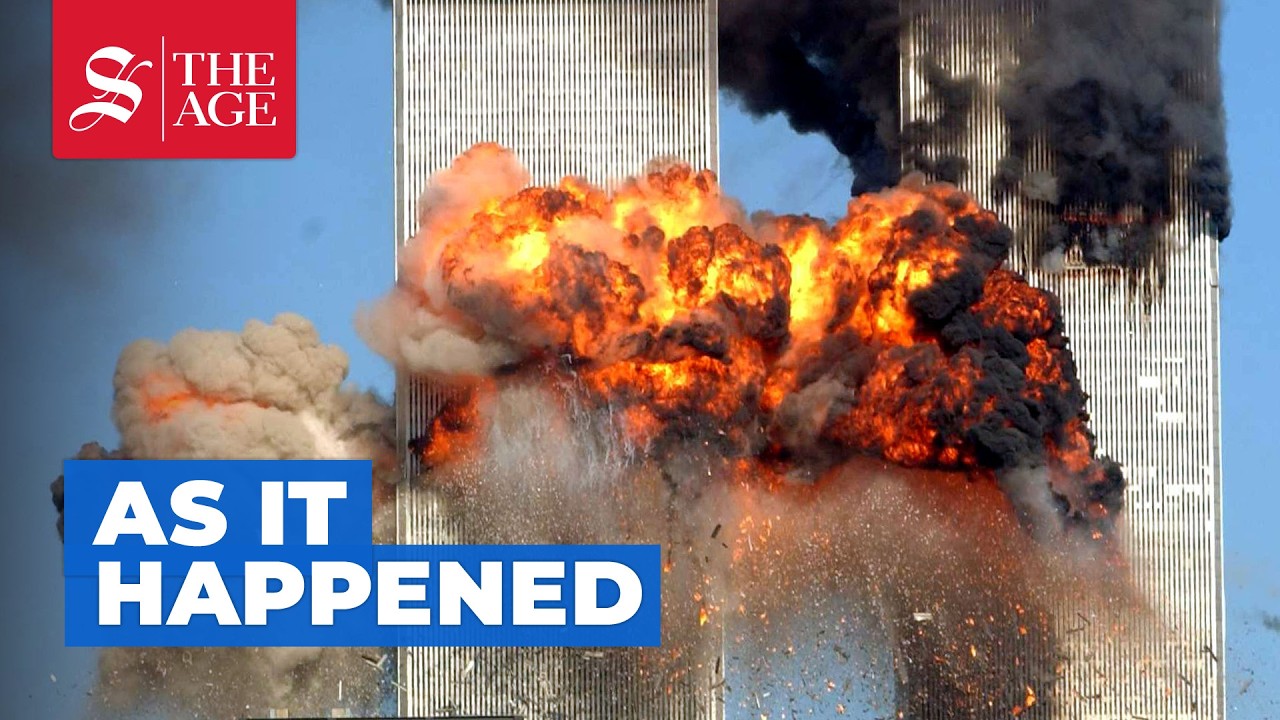
9/11, 2001 as it happened
On September 11, 2001, nineteen Al-Qaeda terrorists hijacked four commercial aircraft to execute a series of coordinated attacks against the United States. Two of the planes were flown into the Twin Towers of the World Trade Center in New York, causing both to collapse, while a third struck the Pentagon, and a fourth crashed in a field in Shanksville, Pennsylvania, following a passenger revolt.
The events resulted in nearly 3,000 deaths - the deadliest act of terrorism in history- and left an indelible mark on the global consciousness as the world watched the tragedy unfold in real-time.
In the wake of the attacks, the U.S. launched the War on Terror and fundamentally reorganized its national security apparatus through the creation of the Department of Homeland Security and the TSA. These shifts transformed everything from international diplomacy to the daily experience of airport checkpoints.
Today, the legacy of 9/11 is preserved through the National September 11 Memorial & Museum, where the original footprints of the towers stand as reflecting pools, honoring the lives lost and the enduring impact on modern history.
On September 11, 1973, Chilean President Salvador Allende was overthrown and killed in a CIA-backed coup. On September 11, 1683, the Ottoman siege of Vienna reached its decisive breaking point at the Battle of Vienna, a turning point in the balance of power between Islamic and Christian Europe.
These events are real and significant, though the connection to 2001 is retrospective pattern-recognition rather than meaningful historical causality. September 11 is, above all, a Tier 1 date: one catastrophe so enormous that it now illuminates everything else nearby, whether or not those things actually belong in its light.
March 15: The Ides That Never Stopped Killing Careers And Kings
Beware the Ides of March. Shakespeare's soothsayer spoke that warning in Julius Caesar, but the anxiety predates the play by millennia. The Ides of March, the 15th, was already considered ominous in Roman tradition before Julius Caesar was assassinated there on March 15, 44 BC, by a group of senators including his trusted ally Brutus.
Caesar's murder was so politically seismic, so narratively perfect in its structure of trust, betrayal, and downfall, that it permanently encoded March 15 into Western cultural memory as a date of reckoning. Shakespeare amplified it further, and it entered the popular imagination as the archetypal cursed date.
What makes March 15 interesting beyond Caesar is that several subsequent political careers and military campaigns have met their ends on or around that date enough to sustain the mythology without requiring invention.
Dates With Genuine Statistical Weight: Tier 2 Pattern Dates
These are the dates where the clustering of events is unusual enough to at least raise an eyebrow before the cognitive-bias explanation kicks in.
Barcelona's Anniversary Curse

The "Barcelona anniversary curse" is a specific superstition primarily haunting FC Barcelona, where the club historically suffers a demoralizing defeat immediately following a major milestone celebration. While the city itself has its share of "cursed" legends, like the Curse of the Liceu, the anniversary hex has become a recurring nightmare for football fans.
The club was founded on November 29, 1899. For over a century, the "curse" has dictated that whenever the club holds a grand gala to celebrate a major milestone (25th, 50th, 100th, or 125th years), the subsequent match ends in an unexpected loss.
The most recent instance in 2024 was particularly stingy. Just hours after a star-studded gala at the Gran Teatre del Liceu, the team, which had been in dominant form, collapsed against a struggling Las Palmas side at the Olympic Stadium.
There is a poetic irony in the fact that these anniversary galas are often held at the Liceu Opera House. In Barcelona folklore, the Liceu is considered the most cursed building in the city. Built on the site of an old convent where executions once took place, it has burned down twice (1861 and 1994) and was the site of a famous anarchist bombing in 1893.
August 4: The Date That Keeps Appearing In Royal Deaths And World Wars
August 4, 1914, was the date Britain formally declared war on Germany, pulling the British Empire into the First World War. Prince Harry was born on August 4, 1984, but far more notably, Queen Elizabeth the Queen Mother was born on August 4, 1900, and Barack Obama on August 4, 1961. The date recurs across major political thresholds with unusual frequency.
Anne Frank's family was discovered hiding in their Amsterdam annex and arrested on August 4, 1944. Percy Shelley, the Romantic poet, drowned on August 4 (Julian calendar equivalent) in 1822. The clustering here is real, even if its meaning is not.
August 4 qualifies as a genuine Tier 2 Pattern Date, notable enough that historians have occasionally remarked on its recurring appearances in British and European political history.
March 11: Two Catastrophes, Seven Years Apart
On March 11, 2004, ten coordinated bomb explosions struck the Madrid commuter rail network, killing 193 people and injuring nearly 2,000 more. It remains the deadliest terrorist attack in Spanish history and the deadliest in Europe since the 1988 Lockerbie bombing.
On March 11, 2011, a magnitude 9.0 earthquake struck off the Pacific coast of Japan, triggering a massive tsunami and causing the Fukushima Daiichi nuclear disaster. The combined death toll exceeded 15,000, with nearly 2,500 still listed as missing.
The two events, separated by exactly seven years and involving mass civilian casualties on a European and Asian scale, made March 11 one of the more striking Tier 2 dates of the modern era. It's a coincidence. But it is a coincidence worth naming.
December 7: A Date Which Will Live In Infamy

Franklin D. Roosevelt used those exact words before Congress on December 8, 1941, the morning after Japan's surprise attack on the American naval base at Pearl Harbor, Hawaii. The attack killed 2,403 Americans and drew the United States into the Second World War.
December 7, 1941, is a Tier 1 mythologized date for the United States in the same way September 11 is for the modern generation. What gives it Tier 2 texture is that December 7 also marks the day in 1995 that NASA's Galileo probe successfully entered Jupiter's orbit, and the date of several lesser-known but significant military and political events across the 20th century.
History uses December 7 regularly. Whether that reflects a curse or simply a calendar with 365 available squares for a century's worth of events is the question this article keeps asking.
Friday The 13th: Deconstructing History's Most Famous Superstition
Triskaidekaphobia, the fear of the number 13, has ancient roots. The number 13 appears in Norse mythology as the unlucky guest at a dinner of the gods that ended in the death of Baldur. In Christian tradition, 13 people sat at the Last Supper. The association of 13 with Friday specifically is harder to trace, but most historians place its modern formalization in the late 19th and early 20th centuries.
The critical fact: no peer-reviewed study has demonstrated that Friday the 13th carries a statistically elevated rate of accidents, deaths, or disasters. A Dutch study published in the American Journal of Emergency Medicine (2008)found slightly fewer traffic accidents and hospital admissions on Friday the 13th, hypothesizing that people were simply more cautious on a date they considered dangerous.
Friday the 13th is a Tier 3 culturally constructed date that has borrowed the aesthetic of Tier 2 without the statistical backbone. It's fascinating precisely because it is almost entirely invented.
Cursed Dates Aren't Just Western: A Cross-Cultural Reckoning
One of the most compelling arguments for taking cursed-date traditions seriously is how independently different civilizations arrived at similar conclusions. The details vary. The impulse doesn't.
Japan's Butsumetsu And The Six-Day Cycle
Traditional Japanese culture uses a six-day calendar cycle called rokuyō that assigns each day a fortune rating. Butsumetsu, loosely translated as "death of the Buddha," is the most inauspicious day in the cycle.
Weddings, business openings, and major undertakings are still routinely avoided on butsumetsu days, even by many modern, secular Japanese families. This is a Tier 3 cultural construction of remarkable durability. It predates any individual catastrophic event association.
The date's ominousness was assigned by religious and cultural tradition, not inferred from post-hoc pattern recognition. That it persists in 21st-century Japan, a highly technological society, says something important about how deeply cursed-date thinking is wired into human behavior.
The Roman Dies Nefasti: History's First Official Cursed Calendar
Ancient Rome had one of history's most elaborate official systems of lucky and unlucky dates. The dies nefasti, literally "unspeakable days", were calendar days on which public business, legal proceedings, and military campaigns were formally prohibited by the state. They were recorded on public calendars displayed across the city.
The Roman calendar designated roughly 58 days per year as nefasti, including the days immediately after the Calends, Nones, and Ides of each month. The system was administered by the pontifices, Rome's priestly college, and updated after significant national disasters. It is the earliest known institutionalized curse-date framework in recorded Western history.
What makes the dies nefasti worth studying beyond historical curiosity is that they demonstrate something important: the tendency to formalize bad dates into official doctrine is not a modern superstition. It is ancient, state-sponsored, and deeply serious.
The Number 4 And East Asian Date Avoidance
In Mandarin, Cantonese, Japanese, and Korean, the word for the number four sounds nearly identical to the word for death. This phenomenon, called tetraphobia, leads to widespread avoidance of the number 4 in floor numbering, phone numbers, hospital room assignments, and dates.
The 4th of any month carries ominous associations across much of East Asia. Buildings in Hong Kong, Taiwan, and mainland China frequently skip the 4th floor entirely. This is a Tier 3 construction with a linguistic rather than historical origin, which makes it perhaps the purest example of a culturally designated cursed date: the date itself did nothing. Language decided it was dangerous.
What Islamic And Hebrew Traditions Say About Ominous Days
Islamic tradition identifies certain days as inauspicious, including the last Wednesday of the Islamic month of Safar, known informally as Arba'a al-Akhira or the "last Wednesday." Because the Islamic calendar is lunar, these dates do not stay fixed relative to the Gregorian calendar; they rotate through the seasons in a cycle that lasts approximately 33 years.
Modern researchers and observers often rely on a Hijri date converterto track these specific historical thresholds across the solar timeline. The Hijri calendar is utilized by approximately 1.9 billion Muslims worldwide (roughly 24% of the global population) to determine religious observances. Unlike the Gregorian system, the Hijri year is about 11 days shorter, totaling 354 or 355 days.
This mathematical drift explains why a "cursed" date in the Islamic tradition might fall in the heat of summer one decade and the cold of winter the next. Historical sources suggest the Safar belief emerged from the association of that day with the onset of the Prophet's final illness, though this has been contested by Islamic scholars who discourage superstitious observance of the calendar.
In the Hebrew calendar, the 9th of Av (Tisha B'Av) is a major fast day commemorating a genuinely extraordinary clustering of Jewish national tragedies. The destruction of both the First and Second Temples in Jerusalem occurred on this date, according to tradition, along with several other catastrophic events in Jewish history. Tisha B'Av is one of the most historically verifiable examples of Tier 2 pattern-clustering in any cultural tradition.
Why Your Brain Sees Curses That Aren't There: The Cognitive Science
This is the section that separates this article from every other treatment of this subject. The dates are real. The events are real. But the sense of supernatural inevitability attached to them is almost entirely a product of identifiable, well-documented cognitive processes.
Apophenia: The Pattern-Finding Machine Running 24/7
Apophenia, a term coined by psychiatrist Klaus Conrad in 1958 and popularized in the cognitive science literature by Michael Shermer's concept of "patternicity," is the tendency to perceive meaningful connections between unrelated stimuli.
The human brain evolved to find patterns because pattern recognition was survival-critical. A rustling bush might be a predator. It is safer to assume a pattern and be wrong than to dismiss it and die.
That same machinery, exquisitely useful in the ancestral environment, runs constantly in the modern world and finds patterns everywhere, including in the calendar. When you learn that three major events share a date, your brain doesn't calculate the statistical probability of that clustering. It records the pattern and files it as meaningful.
Apophenia is not a flaw. It is the price of a cognitive system optimized for fast threat detection. But understanding it is essential to reading cursed dates with any intellectual honesty.
Confirmation Bias And The Tragedy You Remember
Confirmation bias is the well-documented tendency to search for, notice, and remember information that confirms a pre-existing belief while discounting information that contradicts it.
In the context of cursed dates, the mechanism is simple: once you know that April 15 is cursed, you will notice and remember every bad thing that happens on April 15 and quietly ignore the dozens of April 15ths that passed without incident.
The American Psychological Association has documented confirmation bias as one of the most robust findings in cognitive psychology, appearing consistently across cultures, education levels, and contexts. It does not yield easily to intelligence or awareness.
Even knowing about it does not reliably prevent it. This is why even highly educated, analytical people find cursed dates compelling. The bias isn't overridden by sophistication. It runs deeper than conscious reasoning.
Survivorship Bias: The Quiet Dates Nobody Writes About
Survivorship bias is the cognitive error of focusing disproportionately on the cases that made it through a filter, the survivors, while ignoring the equally large population of cases that didn't make it through and therefore aren't visible. Applied to cursed dates: you have heard about April 15 because it has famous events attached to it.
You have never heard that April 16, April 17, and April 18 also each have at least three significant historical tragedies attached to them, because no one decided those dates were cursed, so no one went looking. The dates that "survived" to become famous cursed dates are the ones that had one very large event anchor the search. Every other date's tragedies remain invisible.
The Availability Heuristic And Why Disasters Feel Linked
The availability heuristic, described by psychologists Daniel Kahneman and Amos Tversky in their foundational 1973 paper, is the mental shortcut of judging the probability or frequency of an event by how easily examples come to mind.
Vivid, emotionally charged events, disasters, assassinations, and catastrophes are far more cognitively available than routine events. When you think of November 22, the Kennedy assassination is immediately and vividly available. It crowds out the November 22nd that brought nothing extraordinary.
The heuristic makes the date feel statistically unusual even when the available data doesn't support that conclusion. It is, in short, a gap between emotional memory and statistical reality.
Read Also: Top 10 Crime Stories Of The 2010s
The Most Intriguing Lesser-Known Cursed Dates You've Never Heard Of
The famous dates get most of the attention. But some of the most intellectually interesting "cursed date" patterns involve events most readers won't immediately recognize.
The 27 Club: Myth, Math, And Music's Most Famous "Curse"
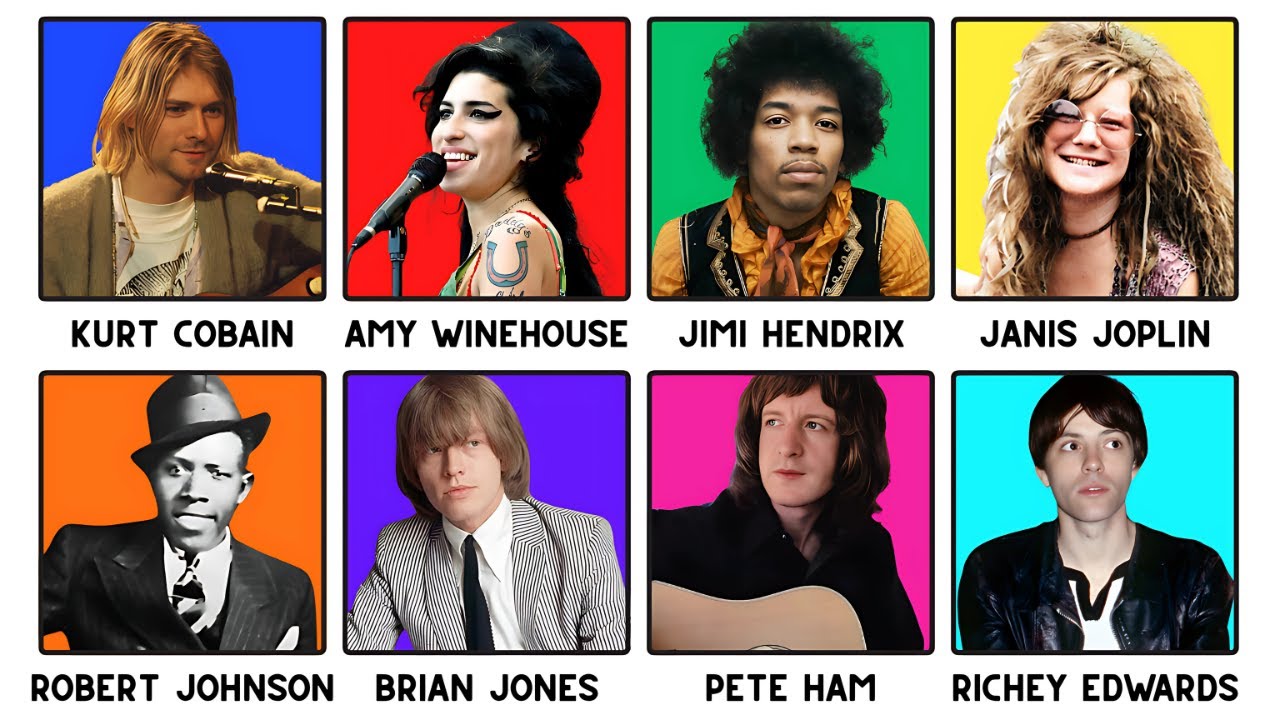
Every Death Of The 27 Club Explained In 12 Minutes
The 27 Club refers to the striking number of highly influential musicians who died at age 27, including Robert Johnson, Brian Jones, Jimi Hendrix, Janis Joplin, Jim Morrison, Kurt Cobain, and Amy Winehouse.
The pattern is so visually compelling that it became one of the most widely discussed "curses" in popular culture. A 2011 study published in the British Medical Journal examined whether 27 was genuinely overrepresented as an age of death among famous musicians.
The researchers found no statistical evidence that musicians are more likely to die at 27 than at 26 or 28. The cluster is real; those musicians did die at that age, but it is not significantly different from the general distribution of early deaths among a high-risk demographic.
The 27 Club is one of the cleanest illustrations of how confirmation bias, survivorship bias, and the availability heuristic combine to manufacture a curse from a statistical non-event.
July 4, 1826: When Two Titans Left Together
On July 4, 1826, the 50th anniversary of the United States Declaration of Independence, both John Adams and Thomas Jefferson died within hours of each other. Adams and Jefferson had been the primary intellectual architects of American independence, had served as the second and third presidents, had been bitter rivals, and had reconciled in old age through a famous correspondence.
Their simultaneous deaths on the nation's semicentennial were so extraordinary that contemporaries genuinely struggled to frame it as a coincidence. John Adams's reported last words, "Thomas Jefferson survives", were wrong; Jefferson had died hours earlier. This event is a genuine Tier 2 pattern moment, and perhaps the most poetically perfect coincidence in American political history.
August 17: Napoleon, The Soviet Union, And A Pattern Worth Noting
Napoleon Bonaparte died on May 5, but August 17 recurs with odd frequency in the dissolution of empires and political orders.
- On August 17, 1943, the Allied campaign in Sicily concluded, marking the beginning of the end for Fascist Italy
- On August 17, 1998, Bill Clinton publicly admitted to his relationship with Monica Lewinsky, effectively breaking his presidency's political momentum
- On August 17, 1999, a catastrophic earthquake struck northwestern Turkey, killing more than 17,000 people
No single anchoring event makes August 17 a Tier 1 date. But its recurring appearances at moments of political fracture and mass casualty events have made it a minor curiosity among historians of coincidence.
The Cursed Date Stress Test: A Quick Reality Check
The following is an illustrative analytical exercise to demonstrate survivorship bias in practice.
Imagine applying the same pattern-seeking scrutiny to February 19, a date nobody has ever declared cursed. With a few hours of research, you would find:
- February 19, 1942: President Roosevelt signed Executive Order 9066, authorizing the forced internment of Japanese Americans
- February 19, 1945: U.S. Marines landed on Iwo Jima in one of the Pacific War's deadliest battles
- February 19, 1878: Thomas Edison received the patent for the phonograph, not a tragedy, but a landmark
- February 19, 2020: The Hanau shooting in Germany killed nine people in a racially motivated attack
Four events of genuine historical significance. One involving mass injustice, one involving catastrophic casualties, one a landmark of human creativity, one a modern act of terror. If someone decided February 19 was cursed and began publicizing that thesis, the pattern would feel immediately convincing to most readers. The calendar isn't selective. Our attention is.
Frequently Asked Questions About Cursed Anniversary Dates
What Are The Most Cursed Dates In History?
April 15, September 11, November 22, and March 15 carry the heaviest documented clusters of major events. Tisha B'Av in the Hebrew calendar also stands out for genuinely unusual historical clustering across Jewish national history.
Why Is April 15 Considered A Cursed Date?
The Titanic sank, Lincoln died, and the Boston Marathon bombing occurred on April 15 in different years. The Notre-Dame Cathedral fire also fell on this date. It is one of the few dates that holds up reasonably well even under critical scrutiny.
Is Friday The 13th Actually Unlucky?
No study has confirmed elevated accident or disaster rates on Friday the 13th. One Dutch study found slightly fewer accidents on that date, likely because cautious behavior increases. Its reputation is rooted in medieval symbolism, not statistical evidence.
What Is Apophenia?
Apophenia is the tendency to perceive meaningful patterns in unrelated or random data. It is the primary cognitive mechanism responsible for the feeling that cursed dates are real rather than constructed.
What Happened On The Ides Of March?
Julius Caesar was assassinated on March 15, 44 BC, by a group of senators in the Roman Theatre of Pompey. The date had pre-existing ominous associations in Roman culture that Shakespeare later immortalized.
Are Cursed Dates Recognized In Other Cultures?
Yes. Japanese butsumetsu, Roman dies nefasti, East Asian tetraphobia around the number 4, and the Hebrew Tisha B'Av all represent independent cultural traditions of designating specific dates as ominous or inauspicious.
Is The 27 Club A Real Statistical Phenomenon?
No. A 2011 British Medical Journal study found no statistical overrepresentation of deaths at age 27 among musicians. The cluster is real but not significantly different from general early-death distributions in high-risk demographics.
What Is Survivorship Bias In This Context?
Survivorship bias means we remember the famous "cursed dates" because they had one huge event to anchor our attention, and we completely forget the identical dates that passed without anything notable. The data is skewed by what we chose to record and remember.
Final Thoughts: The Calendar Isn't Cursed, But The Story Is
The human impulse to mark certain dates as ominous is not weakness or irrationality. It is, at its root, an act of meaning-making, an attempt to impose narrative order on a universe that distributes catastrophe with something close to indifference.
When Lincoln and the Titanic share a date, when Adams and Jefferson leave on the same anniversary they helped create, the mind reaches for significance because significance is how humans process grief, shock, and the fear of randomness.
The dates are real. The events are real. The clustering on some of them is genuinely worth noting. What is not real is the invisible hand placing disasters on specific squares of the calendar. That part, the supernatural architecture of fate, is something the human brain builds quietly, efficiently, and without asking permission.
The most honest conclusion is also, perhaps, the most unsettling one: the calendar doesn't need to be cursed for certain dates to feel that way. Apophenia, confirmation bias, and survivorship bias do the work for free. And the patterns they produce are, by every measure that actually matters, indistinguishable from the real thing.
You land on November 22, and the air changes. These aren't just busy dates. They feel loaded. Most people encounter these patterns and reach for one of two explanations: pure coincidence or something genuinely sinister woven into the fabric of time.
Both answers are unsatisfying. The real story is more interesting than either, sitting precisely at the crossroads of documented history and the peculiar architecture of the human mind.
Key Takeaways
- The most historically event-dense dates include April 15, November 22, September 11, March 15, and August 4
- A "cursed date" can mean three genuinely different things: a mythologized date, a statistically unusual cluster, or a culturally designated ominous day
- The cognitive phenomena of apophenia, confirmation bias, and survivorship bias are largely responsible for how these dates feel supernatural
- Cursed date traditions exist in virtually every major civilization, from ancient Rome to modern Japan
- Some dates genuinely carry unusual historical weight; most are amplified far beyond their evidence by selective memory
What Actually Makes A Date "Cursed"?
Before listing dates, it's worth building the tool you need to actually evaluate them. Not every "cursed date" earns that label the same way, and conflating them produces the kind of shallow listicle that leaves readers more credulous than informed. Here is a taxonomy that holds up under scrutiny.
The Three-Tier Taxonomy Of Cursed Dates
Tier 1: The Mythologized Date
One colossal event anchors the date in collective memory. Every subsequent event, however minor, gets pulled into its gravitational field. The date doesn't have more tragedies than others; it has one tragedy so enormous that people go looking for more, and confirmation bias does the rest.
Tier 2: The Pattern Date
This is rarer and more genuinely interesting. Multiple large, unrelated events have independently clustered around the same calendar square across different years and contexts. The clustering may still be coincidental, but it's at least statistically worth noting rather than immediately dismissing.
Tier 3: The Culturally Constructed Date
Different civilizations have, independently and through entirely separate reasoning, designated specific dates as ominous. These are dates that feel cursed, not because of post-hoc pattern recognition, but because entire societies built ritual and avoidance around them before modern record-keeping even existed.
Three-Tier Taxonomy At A Glance
The Difference Between A Cursed Date And A Busy Calendar
History is dense. Somewhere between 150 and 200 significant events, wars, deaths, natural disasters, and political upheavals occur on every single calendar date if you look across all of recorded human history.
The question is never whether bad things happened on a date. The question is whether they happened at a rate or with a thematic coherence that exceeds what random distribution would predict.
Keeping this distinction in mind transforms the rest of this piece from a list of spooky coincidences into something genuinely analytical. Some dates earn their reputation. Others have simply been assigned one by a culture hungry for patterns.
The Dates That Have Earned Their Reputation: Tier 1 Mythologized Dates
These are the dates when one event so thoroughly dominates historical memory that the date itself became a symbol. What makes them fascinating is what gets added to them afterward.
April 15: The Calendar's Most Documented Dark Square
April 15 has an unusual density of genuinely significant tragedies that holds up even under critical examination. The RMS Titanic sank in the early hours of April 15, 1912, killing more than 1,500 people.
Abraham Lincoln died on April 15, 1865, from the gunshot wound he received the night before at Ford's Theatre. The Boston Marathon bombing occurred on April 15, 2013. The Notre-Dame de Paris cathedral fire broke out on April 15, 2019.
That four events of this scale share a single date is legitimately unusual. It doesn't require supernatural explanation, but it doesn't need to be dismissed either. April 15 is, by any reasonable measure, a Tier 2 Pattern Date that has also been mythologized into Tier 1 territory.
It is worth noting, for the sake of intellectual honesty, that April 15 is also Tax Day in the United States, a high-stress cultural marker that almost certainly amplifies the date's perceived ominousness for millions of Americans.
November 22: A Date That Stopped Three Worlds At Once
On November 22, 1963, President John F. Kennedywas assassinated in Dallas, Texas. The event was so seismic that the date became a permanent psychological landmark for an entire generation. What most people don't know is what else happened that same day.
C.S. Lewis, the author of The Chronicles of Narniaand one of the 20th century's most widely read Christian thinkers, died in Oxford on November 22, 1963. Aldous Huxley, author of Brave New World, died in Los Angeles on the same date.
Three men of enormous cultural weight, a president, a moral philosopher, and a visionary novelist, left the world within hours of each other, almost entirely unnoticed in the noise of Dallas.
This kind of coincidence, three significant deaths on one day that history would otherwise have spread across many obituaries, is precisely the kind of clustering that makes November 22 feel like a Tier 2 Pattern Date wearing Tier 1 clothes.
September 11: When A Date Becomes A Wound
9/11, 2001 as it happened
On September 11, 2001, nineteen Al-Qaeda terrorists hijacked four commercial aircraft to execute a series of coordinated attacks against the United States. Two of the planes were flown into the Twin Towers of the World Trade Center in New York, causing both to collapse, while a third struck the Pentagon, and a fourth crashed in a field in Shanksville, Pennsylvania, following a passenger revolt.
The events resulted in nearly 3,000 deaths - the deadliest act of terrorism in history- and left an indelible mark on the global consciousness as the world watched the tragedy unfold in real-time.
In the wake of the attacks, the U.S. launched the War on Terror and fundamentally reorganized its national security apparatus through the creation of the Department of Homeland Security and the TSA. These shifts transformed everything from international diplomacy to the daily experience of airport checkpoints.
Today, the legacy of 9/11 is preserved through the National September 11 Memorial & Museum, where the original footprints of the towers stand as reflecting pools, honoring the lives lost and the enduring impact on modern history.
On September 11, 1973, Chilean President Salvador Allende was overthrown and killed in a CIA-backed coup. On September 11, 1683, the Ottoman siege of Vienna reached its decisive breaking point at the Battle of Vienna, a turning point in the balance of power between Islamic and Christian Europe.
These events are real and significant, though the connection to 2001 is retrospective pattern-recognition rather than meaningful historical causality. September 11 is, above all, a Tier 1 date: one catastrophe so enormous that it now illuminates everything else nearby, whether or not those things actually belong in its light.
March 15: The Ides That Never Stopped Killing Careers And Kings
Beware the Ides of March. Shakespeare's soothsayer spoke that warning in Julius Caesar, but the anxiety predates the play by millennia. The Ides of March, the 15th, was already considered ominous in Roman tradition before Julius Caesar was assassinated there on March 15, 44 BC, by a group of senators including his trusted ally Brutus.
Caesar's murder was so politically seismic, so narratively perfect in its structure of trust, betrayal, and downfall, that it permanently encoded March 15 into Western cultural memory as a date of reckoning. Shakespeare amplified it further, and it entered the popular imagination as the archetypal cursed date.
What makes March 15 interesting beyond Caesar is that several subsequent political careers and military campaigns have met their ends on or around that date enough to sustain the mythology without requiring invention.
Dates With Genuine Statistical Weight: Tier 2 Pattern Dates
These are the dates where the clustering of events is unusual enough to at least raise an eyebrow before the cognitive-bias explanation kicks in.
Barcelona's Anniversary Curse
The "Barcelona anniversary curse" is a specific superstition primarily haunting FC Barcelona, where the club historically suffers a demoralizing defeat immediately following a major milestone celebration. While the city itself has its share of "cursed" legends, like the Curse of the Liceu, the anniversary hex has become a recurring nightmare for football fans.
The club was founded on November 29, 1899. For over a century, the "curse" has dictated that whenever the club holds a grand gala to celebrate a major milestone (25th, 50th, 100th, or 125th years), the subsequent match ends in an unexpected loss.
The most recent instance in 2024 was particularly stingy. Just hours after a star-studded gala at the Gran Teatre del Liceu, the team, which had been in dominant form, collapsed against a struggling Las Palmas side at the Olympic Stadium.
There is a poetic irony in the fact that these anniversary galas are often held at the Liceu Opera House. In Barcelona folklore, the Liceu is considered the most cursed building in the city. Built on the site of an old convent where executions once took place, it has burned down twice (1861 and 1994) and was the site of a famous anarchist bombing in 1893.
August 4: The Date That Keeps Appearing In Royal Deaths And World Wars
August 4, 1914, was the date Britain formally declared war on Germany, pulling the British Empire into the First World War. Prince Harry was born on August 4, 1984, but far more notably, Queen Elizabeth the Queen Mother was born on August 4, 1900, and Barack Obama on August 4, 1961. The date recurs across major political thresholds with unusual frequency.
Anne Frank's family was discovered hiding in their Amsterdam annex and arrested on August 4, 1944. Percy Shelley, the Romantic poet, drowned on August 4 (Julian calendar equivalent) in 1822. The clustering here is real, even if its meaning is not.
August 4 qualifies as a genuine Tier 2 Pattern Date, notable enough that historians have occasionally remarked on its recurring appearances in British and European political history.
March 11: Two Catastrophes, Seven Years Apart
On March 11, 2004, ten coordinated bomb explosions struck the Madrid commuter rail network, killing 193 people and injuring nearly 2,000 more. It remains the deadliest terrorist attack in Spanish history and the deadliest in Europe since the 1988 Lockerbie bombing.
On March 11, 2011, a magnitude 9.0 earthquake struck off the Pacific coast of Japan, triggering a massive tsunami and causing the Fukushima Daiichi nuclear disaster. The combined death toll exceeded 15,000, with nearly 2,500 still listed as missing.
The two events, separated by exactly seven years and involving mass civilian casualties on a European and Asian scale, made March 11 one of the more striking Tier 2 dates of the modern era. It's a coincidence. But it is a coincidence worth naming.
December 7: A Date Which Will Live In Infamy
Franklin D. Roosevelt used those exact words before Congress on December 8, 1941, the morning after Japan's surprise attack on the American naval base at Pearl Harbor, Hawaii. The attack killed 2,403 Americans and drew the United States into the Second World War.
December 7, 1941, is a Tier 1 mythologized date for the United States in the same way September 11 is for the modern generation. What gives it Tier 2 texture is that December 7 also marks the day in 1995 that NASA's Galileo probe successfully entered Jupiter's orbit, and the date of several lesser-known but significant military and political events across the 20th century.
History uses December 7 regularly. Whether that reflects a curse or simply a calendar with 365 available squares for a century's worth of events is the question this article keeps asking.
Friday The 13th: Deconstructing History's Most Famous Superstition
Triskaidekaphobia, the fear of the number 13, has ancient roots. The number 13 appears in Norse mythology as the unlucky guest at a dinner of the gods that ended in the death of Baldur. In Christian tradition, 13 people sat at the Last Supper. The association of 13 with Friday specifically is harder to trace, but most historians place its modern formalization in the late 19th and early 20th centuries.
The critical fact: no peer-reviewed study has demonstrated that Friday the 13th carries a statistically elevated rate of accidents, deaths, or disasters. A Dutch study published in the American Journal of Emergency Medicine (2008)found slightly fewer traffic accidents and hospital admissions on Friday the 13th, hypothesizing that people were simply more cautious on a date they considered dangerous.
Friday the 13th is a Tier 3 culturally constructed date that has borrowed the aesthetic of Tier 2 without the statistical backbone. It's fascinating precisely because it is almost entirely invented.
Cursed Dates Aren't Just Western: A Cross-Cultural Reckoning
One of the most compelling arguments for taking cursed-date traditions seriously is how independently different civilizations arrived at similar conclusions. The details vary. The impulse doesn't.
Japan's Butsumetsu And The Six-Day Cycle
Traditional Japanese culture uses a six-day calendar cycle called rokuyō that assigns each day a fortune rating. Butsumetsu, loosely translated as "death of the Buddha," is the most inauspicious day in the cycle.
Weddings, business openings, and major undertakings are still routinely avoided on butsumetsu days, even by many modern, secular Japanese families. This is a Tier 3 cultural construction of remarkable durability. It predates any individual catastrophic event association.
The date's ominousness was assigned by religious and cultural tradition, not inferred from post-hoc pattern recognition. That it persists in 21st-century Japan, a highly technological society, says something important about how deeply cursed-date thinking is wired into human behavior.
The Roman Dies Nefasti: History's First Official Cursed Calendar
Ancient Rome had one of history's most elaborate official systems of lucky and unlucky dates. The dies nefasti, literally "unspeakable days", were calendar days on which public business, legal proceedings, and military campaigns were formally prohibited by the state. They were recorded on public calendars displayed across the city.
The Roman calendar designated roughly 58 days per year as nefasti, including the days immediately after the Calends, Nones, and Ides of each month. The system was administered by the pontifices, Rome's priestly college, and updated after significant national disasters. It is the earliest known institutionalized curse-date framework in recorded Western history.
What makes the dies nefasti worth studying beyond historical curiosity is that they demonstrate something important: the tendency to formalize bad dates into official doctrine is not a modern superstition. It is ancient, state-sponsored, and deeply serious.
The Number 4 And East Asian Date Avoidance
In Mandarin, Cantonese, Japanese, and Korean, the word for the number four sounds nearly identical to the word for death. This phenomenon, called tetraphobia, leads to widespread avoidance of the number 4 in floor numbering, phone numbers, hospital room assignments, and dates.
The 4th of any month carries ominous associations across much of East Asia. Buildings in Hong Kong, Taiwan, and mainland China frequently skip the 4th floor entirely. This is a Tier 3 construction with a linguistic rather than historical origin, which makes it perhaps the purest example of a culturally designated cursed date: the date itself did nothing. Language decided it was dangerous.
What Islamic And Hebrew Traditions Say About Ominous Days
Islamic tradition identifies certain days as inauspicious, including the last Wednesday of the Islamic month of Safar, known informally as Arba'a al-Akhira or the "last Wednesday." Because the Islamic calendar is lunar, these dates do not stay fixed relative to the Gregorian calendar; they rotate through the seasons in a cycle that lasts approximately 33 years.
Modern researchers and observers often rely on a Hijri date converterto track these specific historical thresholds across the solar timeline. The Hijri calendar is utilized by approximately 1.9 billion Muslims worldwide (roughly 24% of the global population) to determine religious observances. Unlike the Gregorian system, the Hijri year is about 11 days shorter, totaling 354 or 355 days.
This mathematical drift explains why a "cursed" date in the Islamic tradition might fall in the heat of summer one decade and the cold of winter the next. Historical sources suggest the Safar belief emerged from the association of that day with the onset of the Prophet's final illness, though this has been contested by Islamic scholars who discourage superstitious observance of the calendar.
In the Hebrew calendar, the 9th of Av (Tisha B'Av) is a major fast day commemorating a genuinely extraordinary clustering of Jewish national tragedies. The destruction of both the First and Second Temples in Jerusalem occurred on this date, according to tradition, along with several other catastrophic events in Jewish history. Tisha B'Av is one of the most historically verifiable examples of Tier 2 pattern-clustering in any cultural tradition.
Why Your Brain Sees Curses That Aren't There: The Cognitive Science
This is the section that separates this article from every other treatment of this subject. The dates are real. The events are real. But the sense of supernatural inevitability attached to them is almost entirely a product of identifiable, well-documented cognitive processes.
Apophenia: The Pattern-Finding Machine Running 24/7
Apophenia, a term coined by psychiatrist Klaus Conrad in 1958 and popularized in the cognitive science literature by Michael Shermer's concept of "patternicity," is the tendency to perceive meaningful connections between unrelated stimuli.
The human brain evolved to find patterns because pattern recognition was survival-critical. A rustling bush might be a predator. It is safer to assume a pattern and be wrong than to dismiss it and die.
That same machinery, exquisitely useful in the ancestral environment, runs constantly in the modern world and finds patterns everywhere, including in the calendar. When you learn that three major events share a date, your brain doesn't calculate the statistical probability of that clustering. It records the pattern and files it as meaningful.
Apophenia is not a flaw. It is the price of a cognitive system optimized for fast threat detection. But understanding it is essential to reading cursed dates with any intellectual honesty.
Confirmation Bias And The Tragedy You Remember
Confirmation bias is the well-documented tendency to search for, notice, and remember information that confirms a pre-existing belief while discounting information that contradicts it.
In the context of cursed dates, the mechanism is simple: once you know that April 15 is cursed, you will notice and remember every bad thing that happens on April 15 and quietly ignore the dozens of April 15ths that passed without incident.
The American Psychological Association has documented confirmation bias as one of the most robust findings in cognitive psychology, appearing consistently across cultures, education levels, and contexts. It does not yield easily to intelligence or awareness.
Even knowing about it does not reliably prevent it. This is why even highly educated, analytical people find cursed dates compelling. The bias isn't overridden by sophistication. It runs deeper than conscious reasoning.
Survivorship Bias: The Quiet Dates Nobody Writes About
Survivorship bias is the cognitive error of focusing disproportionately on the cases that made it through a filter, the survivors, while ignoring the equally large population of cases that didn't make it through and therefore aren't visible. Applied to cursed dates: you have heard about April 15 because it has famous events attached to it.
You have never heard that April 16, April 17, and April 18 also each have at least three significant historical tragedies attached to them, because no one decided those dates were cursed, so no one went looking. The dates that "survived" to become famous cursed dates are the ones that had one very large event anchor the search. Every other date's tragedies remain invisible.
The Availability Heuristic And Why Disasters Feel Linked
The availability heuristic, described by psychologists Daniel Kahneman and Amos Tversky in their foundational 1973 paper, is the mental shortcut of judging the probability or frequency of an event by how easily examples come to mind.
Vivid, emotionally charged events, disasters, assassinations, and catastrophes are far more cognitively available than routine events. When you think of November 22, the Kennedy assassination is immediately and vividly available. It crowds out the November 22nd that brought nothing extraordinary.
The heuristic makes the date feel statistically unusual even when the available data doesn't support that conclusion. It is, in short, a gap between emotional memory and statistical reality.
Read Also: Top 10 Crime Stories Of The 2010s
The Most Intriguing Lesser-Known Cursed Dates You've Never Heard Of
The famous dates get most of the attention. But some of the most intellectually interesting "cursed date" patterns involve events most readers won't immediately recognize.
The 27 Club: Myth, Math, And Music's Most Famous "Curse"
Every Death Of The 27 Club Explained In 12 Minutes
The 27 Club refers to the striking number of highly influential musicians who died at age 27, including Robert Johnson, Brian Jones, Jimi Hendrix, Janis Joplin, Jim Morrison, Kurt Cobain, and Amy Winehouse.
The pattern is so visually compelling that it became one of the most widely discussed "curses" in popular culture. A 2011 study published in the British Medical Journal examined whether 27 was genuinely overrepresented as an age of death among famous musicians.
The researchers found no statistical evidence that musicians are more likely to die at 27 than at 26 or 28. The cluster is real; those musicians did die at that age, but it is not significantly different from the general distribution of early deaths among a high-risk demographic.
The 27 Club is one of the cleanest illustrations of how confirmation bias, survivorship bias, and the availability heuristic combine to manufacture a curse from a statistical non-event.
July 4, 1826: When Two Titans Left Together
On July 4, 1826, the 50th anniversary of the United States Declaration of Independence, both John Adams and Thomas Jefferson died within hours of each other. Adams and Jefferson had been the primary intellectual architects of American independence, had served as the second and third presidents, had been bitter rivals, and had reconciled in old age through a famous correspondence.
Their simultaneous deaths on the nation's semicentennial were so extraordinary that contemporaries genuinely struggled to frame it as a coincidence. John Adams's reported last words, "Thomas Jefferson survives", were wrong; Jefferson had died hours earlier. This event is a genuine Tier 2 pattern moment, and perhaps the most poetically perfect coincidence in American political history.
August 17: Napoleon, The Soviet Union, And A Pattern Worth Noting
Napoleon Bonaparte died on May 5, but August 17 recurs with odd frequency in the dissolution of empires and political orders.
- On August 17, 1943, the Allied campaign in Sicily concluded, marking the beginning of the end for Fascist Italy
- On August 17, 1998, Bill Clinton publicly admitted to his relationship with Monica Lewinsky, effectively breaking his presidency's political momentum
- On August 17, 1999, a catastrophic earthquake struck northwestern Turkey, killing more than 17,000 people
No single anchoring event makes August 17 a Tier 1 date. But its recurring appearances at moments of political fracture and mass casualty events have made it a minor curiosity among historians of coincidence.
The Cursed Date Stress Test: A Quick Reality Check
The following is an illustrative analytical exercise to demonstrate survivorship bias in practice.
Imagine applying the same pattern-seeking scrutiny to February 19, a date nobody has ever declared cursed. With a few hours of research, you would find:
- February 19, 1942: President Roosevelt signed Executive Order 9066, authorizing the forced internment of Japanese Americans
- February 19, 1945: U.S. Marines landed on Iwo Jima in one of the Pacific War's deadliest battles
- February 19, 1878: Thomas Edison received the patent for the phonograph, not a tragedy, but a landmark
- February 19, 2020: The Hanau shooting in Germany killed nine people in a racially motivated attack
Four events of genuine historical significance. One involving mass injustice, one involving catastrophic casualties, one a landmark of human creativity, one a modern act of terror. If someone decided February 19 was cursed and began publicizing that thesis, the pattern would feel immediately convincing to most readers. The calendar isn't selective. Our attention is.
Frequently Asked Questions About Cursed Anniversary Dates
What Are The Most Cursed Dates In History?
April 15, September 11, November 22, and March 15 carry the heaviest documented clusters of major events. Tisha B'Av in the Hebrew calendar also stands out for genuinely unusual historical clustering across Jewish national history.
Why Is April 15 Considered A Cursed Date?
The Titanic sank, Lincoln died, and the Boston Marathon bombing occurred on April 15 in different years. The Notre-Dame Cathedral fire also fell on this date. It is one of the few dates that holds up reasonably well even under critical scrutiny.
Is Friday The 13th Actually Unlucky?
No study has confirmed elevated accident or disaster rates on Friday the 13th. One Dutch study found slightly fewer accidents on that date, likely because cautious behavior increases. Its reputation is rooted in medieval symbolism, not statistical evidence.
What Is Apophenia?
Apophenia is the tendency to perceive meaningful patterns in unrelated or random data. It is the primary cognitive mechanism responsible for the feeling that cursed dates are real rather than constructed.
What Happened On The Ides Of March?
Julius Caesar was assassinated on March 15, 44 BC, by a group of senators in the Roman Theatre of Pompey. The date had pre-existing ominous associations in Roman culture that Shakespeare later immortalized.
Are Cursed Dates Recognized In Other Cultures?
Yes. Japanese butsumetsu, Roman dies nefasti, East Asian tetraphobia around the number 4, and the Hebrew Tisha B'Av all represent independent cultural traditions of designating specific dates as ominous or inauspicious.
Is The 27 Club A Real Statistical Phenomenon?
No. A 2011 British Medical Journal study found no statistical overrepresentation of deaths at age 27 among musicians. The cluster is real but not significantly different from general early-death distributions in high-risk demographics.
What Is Survivorship Bias In This Context?
Survivorship bias means we remember the famous "cursed dates" because they had one huge event to anchor our attention, and we completely forget the identical dates that passed without anything notable. The data is skewed by what we chose to record and remember.
Final Thoughts: The Calendar Isn't Cursed, But The Story Is
The human impulse to mark certain dates as ominous is not weakness or irrationality. It is, at its root, an act of meaning-making, an attempt to impose narrative order on a universe that distributes catastrophe with something close to indifference.
When Lincoln and the Titanic share a date, when Adams and Jefferson leave on the same anniversary they helped create, the mind reaches for significance because significance is how humans process grief, shock, and the fear of randomness.
The dates are real. The events are real. The clustering on some of them is genuinely worth noting. What is not real is the invisible hand placing disasters on specific squares of the calendar. That part, the supernatural architecture of fate, is something the human brain builds quietly, efficiently, and without asking permission.
The most honest conclusion is also, perhaps, the most unsettling one: the calendar doesn't need to be cursed for certain dates to feel that way. Apophenia, confirmation bias, and survivorship bias do the work for free. And the patterns they produce are, by every measure that actually matters, indistinguishable from the real thing.